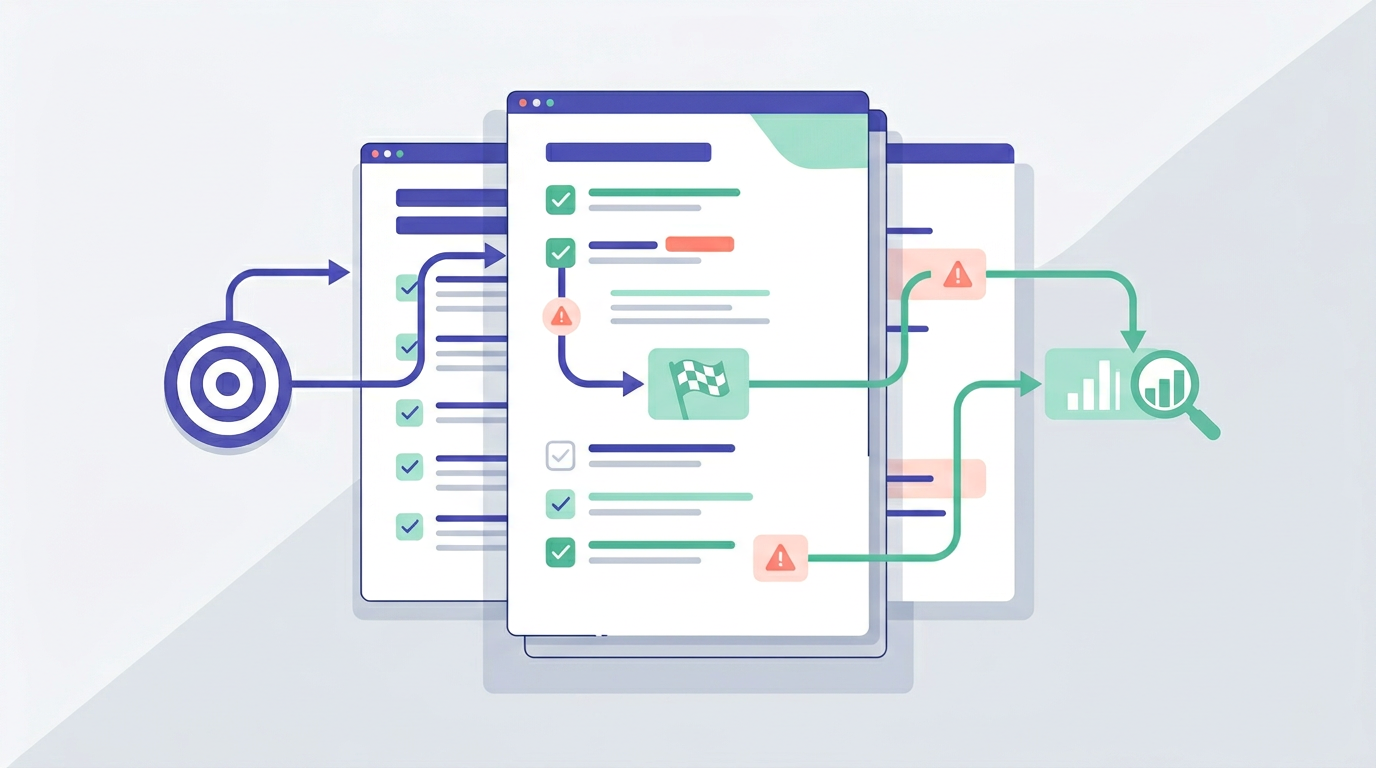
The fear that AI will replace creative knowledge workers is fading. In its place comes a clearer view: AI isn't a competitor — it's the most powerful instrument writers have had since the invention of the word processor. In medical writing, where the cost of error is high and precision is non-negotiable, AI is becoming a genuine "co-pilot".
Paradigm shift: from finding errors to preventing them
Traditional medical-writing work involved hours of monotonous proofreading and cross-referencing. Modern platforms like ClinScriptum reshape this dynamic.
Before: The writer manually hunts for inconsistencies in a 300-page protocol.
Now: The AI auditor delivers a complete report on every numerical, logical, and terminology mismatch within five minutes.
This frees up the most valuable resource — the expert's cognitive bandwidth. Instead of being a "proofreader", the writer becomes the "architect" of the study, focusing on design logic, scientific integrity, and clarity of exposition.
New responsibilities: working WITH AI, not INSTEAD of it
Validating AI suggestions
AI can propose a simplified phrasing for an Informed Consent Form (lay translation). The writer's job is not to accept it blindly, but to evaluate whether semantic accuracy is preserved and no important nuance is lost.
Interpreting complex findings
AI can detect a logical gap between an objective and an endpoint. The writer's role is to analyse the inconsistency and make a strategic call: fix the endpoint, reframe the objective, or add justification.
Tuning and training
Going forward, writers will participate in tuning AI models for specific therapeutic areas, building even more accurate and effective tools.
AI does not devalue the medical writer's expertise — it amplifies it, allowing that expertise to be applied to higher-order work.